
RNAi Controls


Genscript Corporation CD164 hFc Chimera Human
CD164 was found to play a role in many malignant diseases CD164 was associated with clinical and pathological features of patients High level of CD164 was related to the distant metastasis and vascular invasion of bladder cancer patients CD164 was associated with the poor clinical outcomes of BC patients Silencing of CD164 could inhibit the progression of tumors in vivo and in vitro which may become an effective target in the treatment of bladder cancer

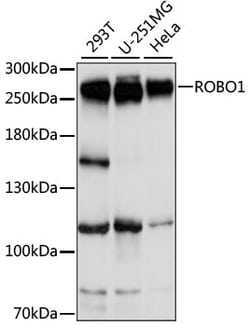
ABclonal Technology ROBO1 Rabbit pAb

Bilateral symmetric nervous systems have special midline structures that establish a partition between the two mirror image halves. Some axons project toward and across the midline in response to long-range chemoattractants emanating from the midline. The product of this gene is a member of the immunoglobulin gene superfamily and encodes an integral membrane protein that functions in axon guidance and neuronal precursor cell migration. This receptor is activated by SLIT-family proteins, resulting in a repulsive effect on glioma cell guidance in the developing brain. A related gene is located at an adjacent region on chromosome 3. Multiple transcript variants encoding different isoforms have been found for this gene.


Medchemexpress LLC Robo1 recombinant protein (rat, HEK293, C-terminal His tag) | 10UG
Recombinant rat ROBO1 receptor protein produced in HEK293 cells with a C-terminal His tag. The product is glycosylated and purified to high quality, making it suitable for binding, structural, and biochemical studies. Supplied as 10 μg with an approximate molecular weight of 70-95 kDa and >95% purity. Store at -20°C and aliquot for extended storage; after reconstitution it is stable at 4°C for short-term use.
Genscript Corporation SIRP Fc Chimera Human
Signal regulatory protein alpha (SIRP designated CD172a) is also known as CD172 antigen-like family member A (CD172a) also called SHPS-1 (SHP substrate 1) and previously MyD-1 (Myeloid/Dendritic-1) which is a monomeric about 90kDa type I transmembrane glycoprotein that belongs to the SIRP/SHPS (CD172) family of the immunoglobulin superfamily SIRP is Ubiquitous and highly expressed in brain SIRPA/CD172a is immunoglobulin-like cell surface receptor for CD47 and acts as docking protein and induces translocation of PTPN6 PTPN11 and other binding partners from the cytosol to the plasma membrane SIRPA/SHPS-1 supports adhesion of cerebellar neurons neurite outgrowth and glial cell attachment and may play a key role in intracellular signaling during synaptogenesis and in synaptic function by similarity SIRP recognition of surfactants SP-A and SP-D in the lung can inhibit alveolar macrophage cytokine production
Genscript Corporation CD200 R1/CRTR2 hFc Chimera Hu
CD200Fc a chimeric molecule including the extracellular domain of CD200 and a murine IgG2a Fc region regulates immune responses following engagement of a cell surface receptor CD200R expressed on cells of the myeloid and T cell lineage A recent report focused attention on a family of CD200Rs but concluded that only one member used CD200 as its ligand
Vector Biolabs Scramble RNAi Adenovirus (Ad-U6-RNAi)
Ready to use in vivo grade AAV and Adenovirus Ready to use in vivo grade AAV and Adenovirus pre synthesized DNA vector High titer viral vectors 1/EA
Genscript Corporation TNFRSF12A/TWEAKR hFc Chimera
Thyroid cancer (TC) is the most well-known endocrine neoplasia as well as a common malignant tumor in the head and neck TNFRSF12A expression may be a potential useful prognostic molecular biomarker of bad survival in thyroid cancer in addition PPAR signaling pathway insulin signaling pathway mTOR signaling pathway may be the key pathway controlled by TNFRSF12A in thyroid cancer Further experimental ought to be performed to demonstrate the biologic effect of TNFRSF12A
Genscript Corporation ROR1 hFc Chimera Human/Cynomo
ROR1 (Receptor tyrosine kinase-like orphan receptor 1) also known as neurotrophic tyrosine kinase receptor-related 1 (NTRKR1) is a member of the ROR family within receptor tyrosine kinases (RTK) superfamily Two ROR family members (ROR1 and ROR2) have been identified and are characterized by the intracellular tyrosine kinase domains highly related to those of the Trk-family receptor tyrosine kinases and by the extracellular Frizzled-like cysteine-rich domains and kringle domains which are common to receptors of the Wnt family members
Genscript Corporation CD30/TNFRSF8 hFc Chimera Huma
The transmembrane receptor CD30 (TNFRSF8) and its ligand CD30L (CD153 TNFSF8) are members of the tumor necrosis factor (TNF) superfamily and display restricted expression in subpopulations of activated T-and B-cells in nonpathologic conditions CD30 expression is upregulated in various hematological malignancies including Reed-Sternberg cells in Hodgkin s disease (HD) anaplastic large cell lymphoma (ALCL) and subsets of Non-Hodgkin s lymphomas (NHLs)
Genscript Corporation CD28H/IGPR-1 hFc Chimera Huma
CD28H is constitutively expressed on all naive T cells Repetitive antigenic exposure however induces a complete loss of CD28H on many T cells and CD28H negative T cells have a phenotype of terminal differentiation and senescence After extensive screening in a receptor array a B7-like molecule B7 homologue 5 (B7-H5) was identified as a specific ligand for CD28H
Genscript Corporation IL-17R alpha/CD217 hFc Chimera
Interleukin 17 (also known as CTLA 8) is a T cell expressed pleotropic cytokine IL 17 binds to IL 17 receptor (IL 17 R) which shares no homology with any known family of receptors While the expression of IL 17 is restricted to activated T cells the IL 17 R mRNA exhibits a broad tissue distribution and has been detected in virtually all cells and tissues tested The human IL 17 R gene was localized to chromosome 22
Genscript Corporation CD44 hFc Chimera Human
CD44 is a hyaluronan binding cell surface signal transducing receptor that influences motility cell survival and proliferation as well as the formation of tumor microenvironment CD44 contains two variable regions encoded by variable exons Alternative splicing which is often deregulated in cancer can produce various isoforms of CD44 with properties that may have different tissue specific effects and therefore even diverse effects on cancer progression

STA Pharmaceutical DNA T amidite | 5 g | CAS 98796-51-1 | MDL MFCD00055063
DNA T amidite is a Amidite reagent (Subcategory: Thymine Series) sold by WuXi TIDES. Offered in 5 g. Store at -20 °C. SDS available for reference.
Specifications
- CAS: 98796-51-1
- MDL: MFCD00055063
- InChIKey: UNOTXUFIWPRZJX-CEXSRUIHSA-N
- Molecular Weight: 744.825761998
- Molecular Formula: C40H49N4O8P
- Purity: ≥99%
- Container Type: 100 mL Glass (Septum)
- Pack Size: 5 g
- Net Weight: 5 g
- Gross Weight: 100.4 g
- Commodity Code: 29349990
- Country Of Origin: China
- IUPAC: (2R,3S,5R)-2-((bis(4-methoxyphenyl)(phenyl)methoxy)methyl)-5-(5-methyl-2,4-dioxo-3,4-dihydropyrimidin-1(2H)-yl)tetrahydrofuran-3-yl (2-cyanoethyl) diisopropylphosphoramidite
- SMILES: CC1=CN([C@H]2C[C@H](OP(OCCC#N)N(C(C)C)C(C)C)[C@@H](COC(C3=CC=C(OC)C=C3)(C4=CC=C(OC)C=C4)C5=CC=CC=C5)O2)C(NC1=O)=O
Genscript Corporation CD99/MIC2 hFc Chimera Human
CD99 is a cell surface protein with unique features and only partly defined mechanisms of action This molecule is involved in crucial biological processes including cell adhesion migration death differentiation and diapedesis and it influences processes associated with inflammation immune responses and cancer CD99 is frequently overexpressed in many types of tumors particularly pediatric tumors including Ewing sarcoma and specific subtypes of leukemia
Genscript Corporation ROR1 hFc Chimera Human/Cynomo
ROR1 (Receptor tyrosine kinase-like orphan receptor 1) also known as neurotrophic tyrosine kinase receptor-related 1 (NTRKR1) is a member of the ROR family within receptor tyrosine kinases (RTK) superfamily Two ROR family members (ROR1 and ROR2) have been identified and are characterized by the intracellular tyrosine kinase domains highly related to those of the Trk-family receptor tyrosine kinases and by the extracellular Frizzled-like cysteine-rich domains and kringle domains which are common to receptors of the Wnt family members